Description
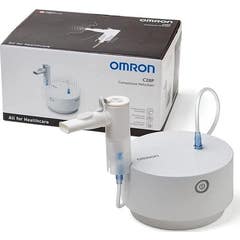
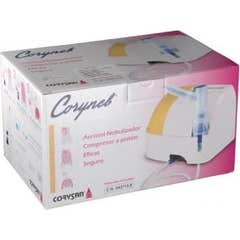
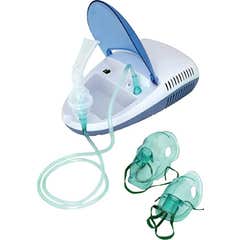
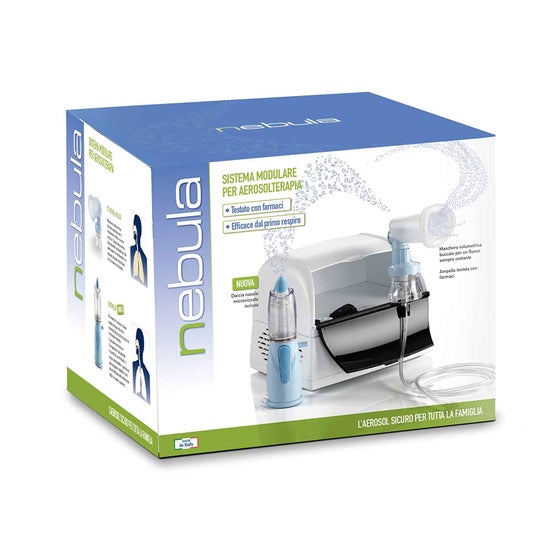
CORYSAN Compressor Nebulizer is a device designed to transform liquid medications into aerosol. This equipment facilitates the direct delivery of the drug to the lower airways, making it suitable for patients with conditions such as asthma, chronic bronchitis, or COPD who require efficient and safe pulmonary administration in a home environment.
The benefits of CORYSAN Compressor Nebulizer focus on its ability to optimize the deposition of the medication in the bronchial tree. Its technical action mechanism employs a high-performance air compressor that generates micronic-sized particles, ensuring deep penetration into the lungs and a notable reduction in respiratory crisis times.
- Ensures a constant and uniform nebulization, allowing you to receive the exact therapeutic dose prescribed by the specialist.
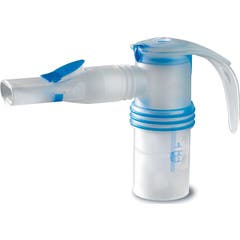
- Includes a complete kit of ergonomic accessories with a mask and mouthpiece, adapting to the anatomy to avoid medication loss during inhalation.
- Features an integrated storage compartment, designed to keep all components protected from external contaminants and ensure the hygiene of the equipment.
- Offers a high-durability structure with a stable base, allowing you to carry out your treatment sessions with total safety and comfort.
- Provides an immediate improvement in ventilatory capacity by liquefying secretions and facilitating the opening of obstructed bronchi.
Instructions for use
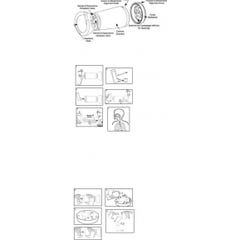
Breathe through your mouth, using the anatomical mask well adjusted to your face. Avoid nasal breathing, unless it has been expressly indicated by the doctor. The nose acts as a filter, retaining a good part of the medicinal mist and thus preventing it from reaching its true target, which are the fine bronchial branches.
Breathe slowly and deeply. At the peak of inhalation, before exhaling, take a small pause (one second) to allow the medication to settle. The greater the volume of air that reaches the lungs, the greater the amount of medication that air carries. Inhale intensely while the aerosol is functioning, without talking or doing anything else.
Do not breathe continuously until the medication is exhausted, but rather take breaks from time to time. A deep breath as described above can cause some fatigue. Forced breathing (hyperpnea) leads to a drop in carbon dioxide in the blood, causing dizziness; therefore, take 8 to 10 slow, deep breaths, and then stop the device to rest for 15-20 seconds.
Alternate cycles of 8-10 deep breaths with pauses until the contents of the nebulizer vial are exhausted.
The duration of the pauses can be adjusted by you according to your physical and respiratory conditions.
Particular patience and availability are necessary when it comes to practicing aerosol therapy with children.
It is understandable that the child may be less motivated than the adult and tire more easily.
It is easier to achieve correct inhalation in children by increasing the number and duration of the pauses. After a series of breathing acts, the child can go play or do other things. The important thing is that the aerosol dose is fully absorbed, even if it may take up to half an hour.
A particular case is that of the baby. In this case, it is possible to practice aerosol therapy under a tent.