

Product details
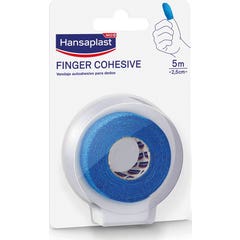
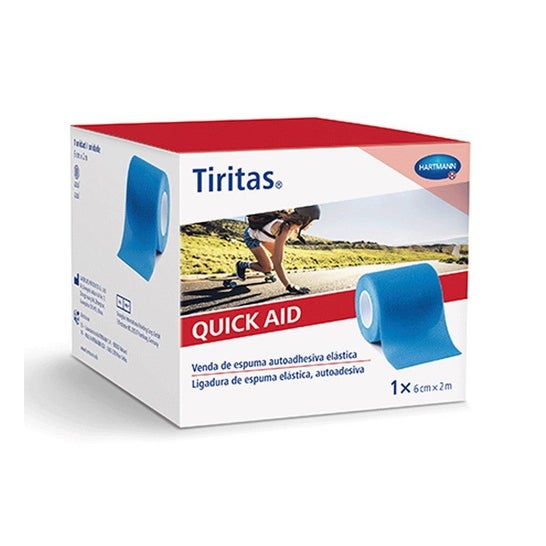
Tiritas Quick Aid wounds and cuts is a self-adhesive foam bandage specifically designed to provide protection against minor skin injuries. Its elastic technology allows for a controlled compression that helps stop bleeding quickly, making it suitable for active individuals or athletes who need a first aid solution that does not restrict movement.
The benefits of Tiritas Quick Aid focus on its unique adhesion capability: the material only sticks to itself and not to the skin, hair, or the wound, ensuring a painless and trauma-free removal from the scar tissue. Being water-resistant and breathable, it maintains an optimal environment for healing while protecting the area from dirt and external contaminants.
- Efficient absorption: Its foam structure manages light exudate, keeping the wound dry and protected.
- High flexibility: It perfectly adapts to joints and difficult areas like fingers or elbows without coming off.
- Free of chemical adhesives: Minimizes the risk of allergic reactions or irritations on sensitive skin by not containing traditional glue.
- Custom cut: Allows you to manually adjust the necessary length, facilitating a technical and precise application in seconds.
- Mechanical protection: Provides additional padding that cushions potential impacts or friction on the injury.
Depending on the amount of bleeding, fold a compress and place it over the wound. Cover the wound with medium pressure.
New in Flesh wounds
- Compeed Wound Hydrocolloid Waterproof Plasters Assorted 10 pcs
- Compeed Wound Hydrocolloid Waterproof Plasters Fingers 10 pcs
- Compeed Wound Hydrocolloid Dressings Waterproof Medium 10 pcs
- Cosmopor Transparent Dressing 5 x 7.2 cm 5 pcs
- Cosmopor Transparent Dressing 10 x 20 cm 5 pcs
- Hartmann Peha-Haft Easy Self-Adhesive Bandage Blue 8 cm x 4 m
- Cutimed Sorbion Sachet S Drainage 10 x 10 cm 10 pcs
- Hartmann Peha-Haft Easy Self-Adhesive Bandage Blue 6 cm x 4 m
- Hartmann RespoSorb Silicone Border Heel 25 x 25 cm 10 pcs
- Urgo Sterile Adhesive Dressings Large Size 5 units